Showing posts with label western historical fiction. Show all posts

Friday, April 10, 2026

Five Ways Easter and Spring Appear in Western Fiction by Caroline Clemmons


Spring arrives differently on the frontier. There are no department store window displays, no pastel ribbons tied to city lampposts. Instead, spring shows up in the smell of thawing earth, the sound of creeks running high with snowmelt, and the first brave wildflowers pushing through soil that seemed dead just weeks before. For readers and writers of western historical fiction, that rawness makes spring—and Easter—even more meaningful. 

Here are five ways Easter and spring naturally appear in western historical fiction, and why those moments resonate so deeply with readers. 

1. Easter Sunday Services in Frontier Towns and Homesteads 

Church was one of the few community institutions that took root almost as soon as settlers did, and Easter Sunday was one of its biggest days of the year. In western historical fiction, an Easter service can do a remarkable amount of storytelling work in just a few pages. 

Picture a small congregation crowded into a clapboard church barely bigger than a barn, or a circuit preacher arriving on horseback just in time to hold services under an open sky. Easter meant: 

  • Families dressed in their very best, even if "best" meant a clean calico dress and boots polished with tallow. 
  • Communities gathering from miles around—ranches, homesteads, and town lots alike. 
  • Hymns sung without instruments, or accompanied by a battered pump organ someone hauled west in a wagon. 
  • Sermons about resurrection and hope that meant something particular to people who had lost so much to weather, illness, and distance. 

For characters carrying grief—a widow rebuilding after loss, a rancher starting over after a failed first venture—that Easter message lands differently than it would in a comfortable eastern parlor. And for readers, those scenes carry genuine emotional weight. 

2. Spring Planting as a Symbol of Hope and Survival 

In the historical West, spring planting was not optional. It was the difference between eating and not eating come winter. That urgency gives spring garden and field scenes a tension that purely decorative settings never quite achieve. 

In western historical fiction, the planting season often marks a turning point: 

  • A new widow deciding whether to stay on her land or sell out plants her first spring garden alone—and her choice to press seeds into the soil is her answer. 
  • A hero and heroine who have been circling each other warily find common ground working side by side to get crops in before a coming storm. 
  • A homesteader's first kitchen garden signals permanence; she is no longer just surviving—she is building something. 

Seed catalogs, which began reaching frontier homes in the latter half of the nineteenth century, appear in period fiction as small miracles. Imagine a woman poring over descriptions of vegetables and flowers she has never grown, making careful choices about what to order with very little money. That catalog is her plan for the future written on paper. 

Spring planting also carried the weight of everything that could go wrong—late frost, drought, grasshoppers, flooding. That vulnerability keeps frontier hope from feeling naive. These characters know the risks. They plant anyway. 

3. Wildflowers and the Return of Color to the Land 

After a hard western winter, color comes back to the land gradually and then all at once. For readers and writers of western historical fiction, that return of color is deeply satisfying—and symbolically rich. 

Different regions brought different blooms: 

  • Texas hill country and prairies burst with bluebonnets, Indian paintbrush, and evening primrose in March and April. 
  • The Kansas and Nebraska plains saw pasqueflowers pushing through while snow still patched the ground. 
  • The Colorado foothills offered early shooting stars and golden banner along creek banks before the higher elevations had thawed. 

In fiction, wildflowers can mark the emotional turning point of a story. A heroine who arrived in the West in the dead of winter, doubting every choice she made, steps outside one April morning to find the world has gone gold and blue while she wasn't looking. It doesn't fix her problems, but it gives her a reason to stay. 

Wildflowers also give western heroes a rare chance at tenderness. A rough-edged rancher who stops work to let a patch of wild columbine bloom undisturbed, or who brings a handful of field flowers to a woman who has had very few gentle moments—those small details build character quietly and effectively. 

4. Easter Traditions Carried West From Home 

Frontier families did not leave all their traditions behind when they crossed the Mississippi. They carried them west in memory and practice, adapting as needed with whatever materials the land offered. 

Easter traditions that appear in western historical fiction include: 

  • Egg dyeing with natural materials: onion skins for gold and rust tones, beet juice for pink, walnut hulls for brown. Frontier women were resourceful, and their Easter eggs were no less beautiful for being made without store-bought dye. 
  • Easter baskets filled with what was available: dried fruit, a small paper of hard candy, a new hair ribbon if the family could manage it. 
  • Special Easter meals: a ham if the smokehouse allowed, fresh bread, a cake or pie that represented real sacrifice in sugar and flour. 
  • New clothes for Easter Sunday—or the wish for them. A child's longing for a new dress or a young woman carefully mending her best outfit to be presentable can tell you everything about her circumstances without a word of explanation. 

These traditions, adapted to frontier conditions, connect characters to the homes and families they left behind. They also show readers that the West was settled by whole people—people who missed things, who tried to hold onto beauty even when life was hard, and who believed that celebration still mattered when there wasn't much to spare. 

5. Spring as the Season of New Beginnings in the Story Arc 

In western historical fiction, spring often arrives at the same time a romance is finding its footing—and that parallel rarely feels accidental. The season does thematic work that supports the story without the author having to spell it out. 

Spring in the story arc can signal: 

  • A fresh start after winter hardship: Two characters who weathered something difficult together—a blizzard, a cattle loss, an illness—emerge into spring changed, and closer. 
  • The reopening of possibilities: Trails that were impassable in winter are clear. New people arrive in town. Old grudges feel less fixed when the air smells like green grass and wild onion. 
  • The approach of a deadline: Spring also brings roundup, trail drives, and planting urgency. Those practical pressures push characters toward decisions they have been avoiding all winter. 

One of the things I love most about writing western historical fiction is that the land itself keeps time. Readers feel the turn of the seasons as a real, physical thing—not just a backdrop, but a participant in the story. Spring's arrival, with all its wildness and hope and risk, is one of the most powerful tools a Western author has. 

Whether it's an Easter Sunday that draws a lonely widow back into her community, a garden planted as an act of stubborn faith, or a hillside gone brilliant with wildflowers overnight, spring in the historical West carries a particular kind of promise. It has been tested by winter. It knows what it costs to return. And it comes back anyway—which is really the heart of every good Western romance. 

Friday, May 22, 2020

LOUISA: IRON DOVE OF THE FRONTIER


Don't forget the Rafflecopter giveaway at the end of this post!


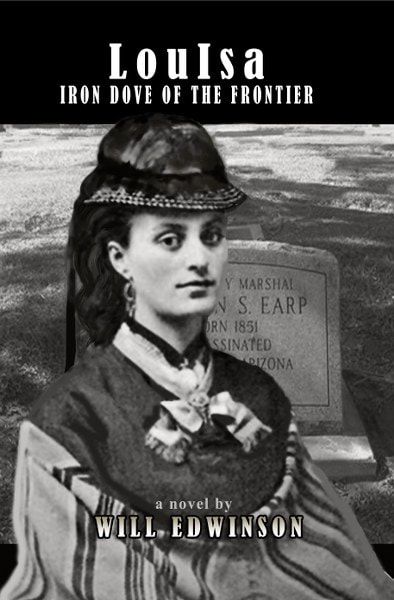
LouIsa: Iron Dove of the Frontier 
by
Will Edwinson 
Genre: Western Historical Fiction 


THE IRON DOVE OF THE FRONTIER...

At twenty-one, LouIsa was already a sagacious woman. She had been privileged to attend finishing schools in the East where she learned the ways of "Ladyship" and studied piano under the tutorship of masters, becoming proficient with the classical works of Mozart, Bach, Chopin, Beethoven, Liszt, and many others.

LouIsa: Iron Dove of the Frontier is a story about a tough, but well-educated genteel woman of quiet strength who, when it became necessary, could get down and dirty and fight as adeptly as the best gutter rats. But also, when necessary, she could don a party dress and be perfectly comfortable with Vassar graduates. 


LouIsa, entertainer extraordinaire was halfway through the1st movement of a piano concerto that she was playing at the Cattlemen’s Saloon in Wichita when she saw him approach the bar. He was big and ugly.

“A bottle of whiskey,” he yelled at the bartender.

All eyes focused on Bart Ricklin. He looked mean and sullen, and there was no mistaking he was liquored up.

LouIsa stopped playing.

Bart focused his gaze on her. “So you’re the little squaw lady I been hearin’ about that plays them fancy high brow tunes. People’re a talkin’ about you all across the state of Kansas, Lady. I must say you’re purtyer’n even I imagined. I always wanted to taste me some squaw meat, and by damn tonight I aim to have me some – high class stuff to boot.”

This statement brought some of the local cowboys to their feet, hands on their gun butts. Drunk as he was, the rowdy was still fast. His sidepiece cleared leather, and he fired a shot at their feet before they could blink.

“Any of you fellers thinkin’ of tryin’ to interfere with me and this little lady havin’ us some fun?”

His cold, mean eyes bore right through them. They all backed down and took their seats. He uttered a mean laugh. “That’s more like it,” he barked. “Bunch o’ lily livered cowards.”

He holstered his pistol and turned his attention back to LouIsa only to find himself staring down the barrel of her pistol. She had seized the opportunity of his temporary distraction with the cowboys to retrieve her small .38 “LouIsa Special” she kept hidden beside her on the piano bench under her full skirt.

Her father Samuel Houston had it custom made for her by the Colt Company. It was on a smaller frame than most .38’s, and many a foe were lulled into thinking it was less menacing than it really was. Bart Ricklin made that same mistake.

Bart laughed at the sight of it. “You aimin’ to stop me with that little pea shooter?” he asked.

He reached out and snatched a bottle of whiskey from the bar and pulled a long horn from it. He felt the whiskey spray, and the glass sting his face, before he heard the shot. He looked at her with incredulousness.

“You daughter of a bitch,” he roared. “You shot me.” He growled like a mad dog and lunged toward her; . . .


What inspired you to write this book?
Actually it was a neighbor. We were talking about one of my other books and she said, “You ought to write a book about my great grand-aunt. And I said, who might that be? She said, “LouIsa Houston-Earp. She was Sam Houston’s granddaughter, and she was also a Harvey girl”. And not knowing what a Harvey girl was, I asked her, “What was a Harvey girl.”

She explained to me that Fred Harvey owned and operated high end restaurants in several railroad depots during the 19th century, and these girls were waitresses in those restaurants. Then she went on to tell me that LouIsa had also been married to Morgan Earp, Wyatt Earp’s younger brother. This piqued my interest. We talked a bit more and my creative juices began to flow. Since not much had been written about the real-life LouIsa, I had to create my own character. She was a real person, but not exactly the same person as the one in my story.

How did you come up with the concept of the characters for the book?

Actually, I didn’t. They just came into the story as I was writing it. I don’t write from outlines. I agree with Stephen King. He says outlines kill the creative spirit. He says, “Just write the damn story” so that’s what I did. The characters came into the story as needed.

What did you enjoy most about writing the book?
Anticipating where the characters were going to take me. They actually wrote the book. I just went along for the ride, but I have to say it was a fun and exciting ride. Full of exciting experiences and surprises.

Who designed your book cover?
The publisher.

Do you feel the characters high jacked your story?
I wouldn’t go so far as to say they high-jacked the story, but they did play a great role. I’d have an idea for a scene in my mind and would start to write the scene. The characters said to me: “Sorry, Will, but we don’t agree with what you have in mind. Just sit back and write what we tell you. It will be much better.”

Convince us why your book is a must read.
Because I believe it’s full of interesting situations.

When did you first consider yourself as a writer.
For most of my life I felt I didn’t have the talent to be a writer. Then at age 55, I said to myself, “Will, if you’re ever going to do it, you’d better get started, or it will be too late. So at age 55 I wrote my first book (which, as of this time, I have not submitted for publication).”

Have you written any other books that are not published?
As of this date, the one mentioned in the previous question is the only one.

Who is your favorite author?
I really don’t have a favorite. I have read multiple books by many authors ranging from Robert B. Parker, Jack Higgins, Agatha Christie, Richard Paul Evans, Rosemund Pilcher, Adel Abbot, David Baldacci, Jonathan Cahn, Raymond Chandler, Don Coldsmith, Sydney Sheldon, George Orwell, Janet Evanovich, John Grisham, Winston Groom, F. Scott Fitzgerald, Sue Grafton, and many others too numerous to include here.

How would you describe your writing style?
Light—and I hope—interesting.

Do your characters come to you all at the same time?
No, they just appear as the story progresses. They all seem to know when it’s the right time to enter the story.


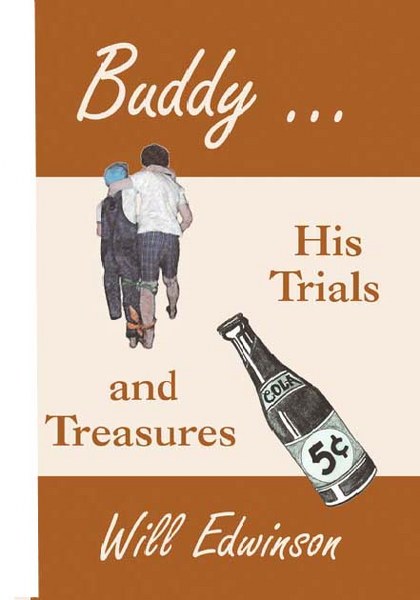
Buddy... His Trials and Treasures 
by
Will Edwinson 
Genre: Contemporary Historical Fiction 


Do you need a little stress relief in your life?
Travel back to the world of Buddy Crawford, a simpler, slower- paced world where Cokes were a nickel, movie tickets were a dime, and ten cents bought you a double dip ice cream cone. These engaging, award-winning stories about a young boy growing up in rural America during the 1940s provide a relaxing respite from today's fast-paced world. They may even revive old memories of your own childhood.

Follow Buddy and Cousin Mont as they gather beer and pop bottles from the roadway barrowpits. Join him and his friends at the river swimming hole for a swim, or go fishing for carp in the irrigation canal. Experience the fun as he tours the countryside in an old Model T Ford with his friends. What better way to spend a relaxing two hours than immersing yourself in these stories.

Buddy is somewhat reminiscent of Tom Sawyer in that he quite often finds himself in hot water. Unlike Tom, Buddy's misdeeds are without forethought. They happen because Buddy is...well...he's just Buddy. 


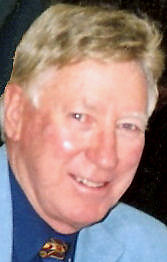
Will Edwinson, Author

Will Edwinson is an award-winning storyteller for his fiction, and an award winning columnist. His second book, Buddy ... His Trials and Treasures, won a first place in state competition, and a second place at national. His "A Bit Of Nostalgia" column that he wrote under another name, won second and first place, awards in two separate competitions from the Utah-Idaho-Spokane Associated Press Association.

Edwinson grew up in rural Southeast Idaho during the 1940s. After his college stint, he made his living on the family farm in Southeast Idaho as a dry land farmer raising barley and wheat, always holding onto the dream he had harbored for most of his life-that of being a writer-but still not confident that he had the necessary abilities and skills for such a career. After reaching mid-life, he determined that if he were ever going to be a writer, it was time to begin. His first book was launched when he was in his mid-fifties.

Edwinson is basically a self-taught author. His passion lay toward storytelling, so he began reading fiction of every genre to get a grasp of different writing styles and writing techniques. He also took advantage of the many books and manuals on writing that were available. These are mentioned on his Links & Lists page at his website, www.willedwinson.com. He is also a graduate of Writer's Digest Short Story Writing course.

In his younger years, Edwinson was also a semi-professional singer, performing on stages from Sun Valley, Idaho, to Lake Havasu City, Arizona. He also demonstrates a flair as an inventor. Out of necessity, to teach his two youngest daughters some rudimentary money management skills, he invented and Trademarked a children's allowance management system, "The Child's Checkmaster." which enabled parents and children to keep better track of the children's allowance draws and which also taught the children some rudimentary money management skills.

Will Edwinson currently lives in Tucson, Arizona. 


Follow the tour HERE for special content and a giveaway!